An old wardrobe had reached the end of its days, but the mirror door was too good to throw away. After all, it works just as well as a wall mirror. The only question was how to get a wardrobe door onto the wall properly.
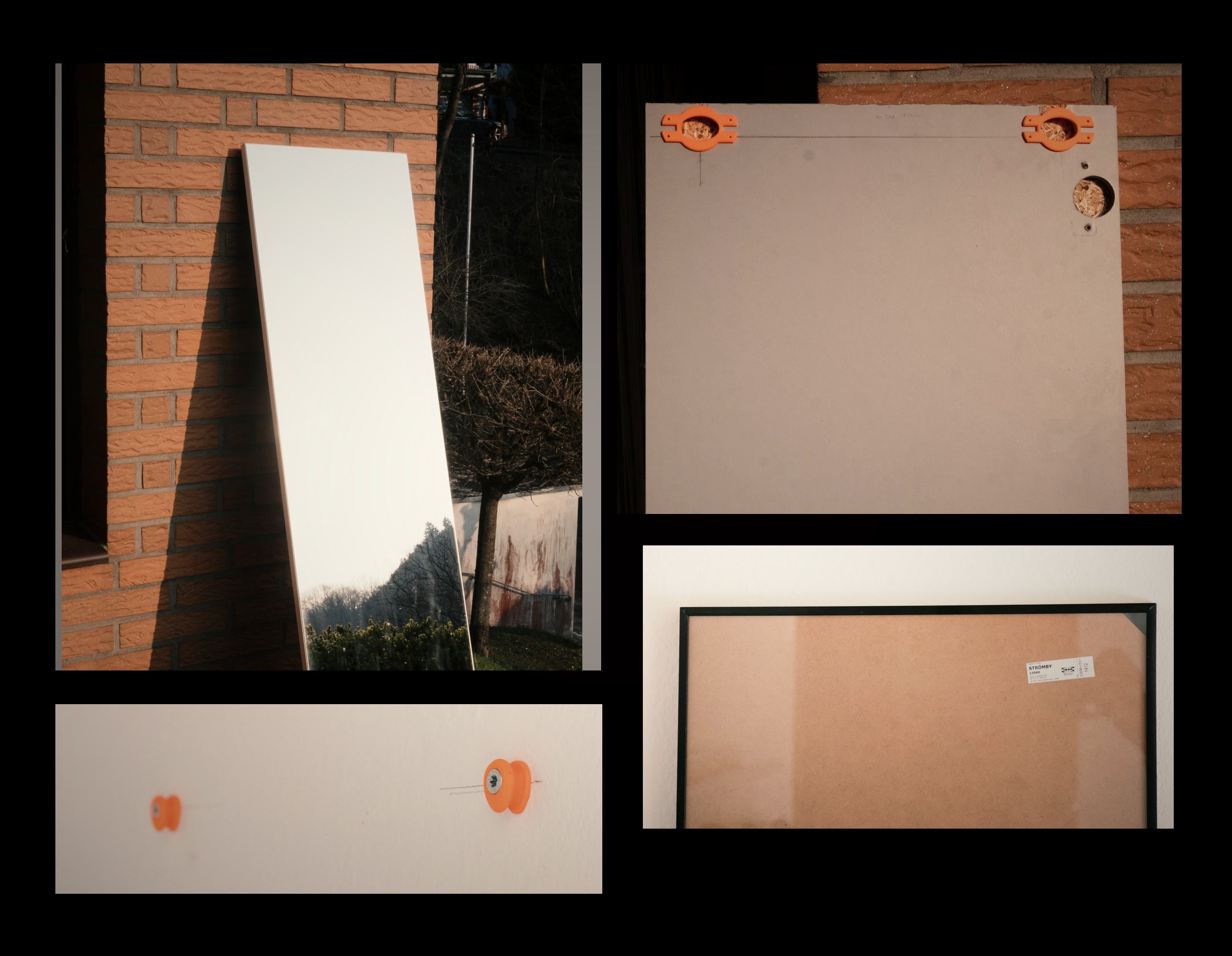
Update: the mirror really is still hanging in the hallway today.
The idea: use the hinge hole
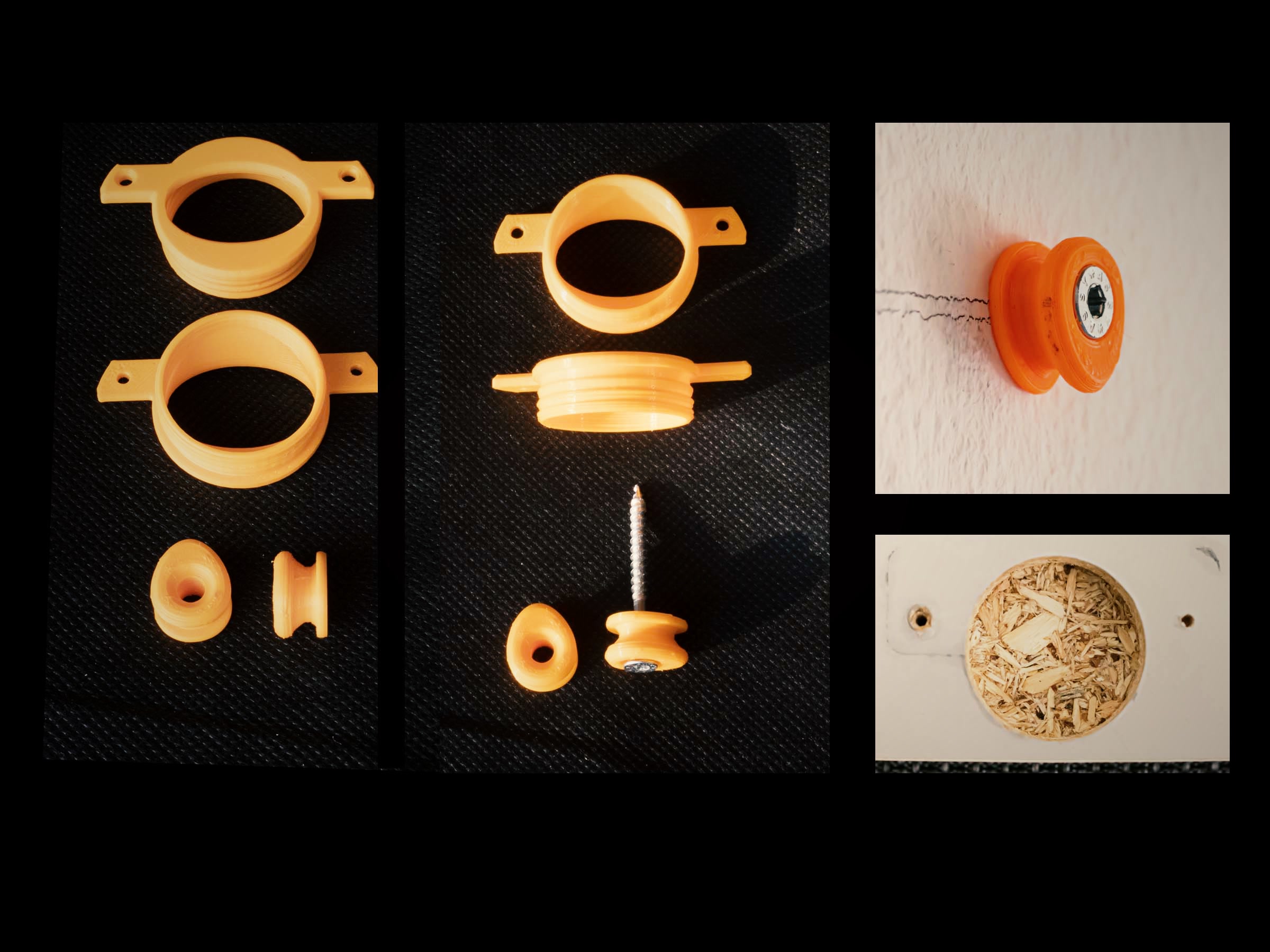
Wardrobe doors almost always hang on concealed cup hinges. Unscrew them, and round holes remain in the door, 35 mm in diameter and about 12 mm deep. That’s exactly what I used: a printed insert goes into the hole, and it sits on a printed hook on the wall.
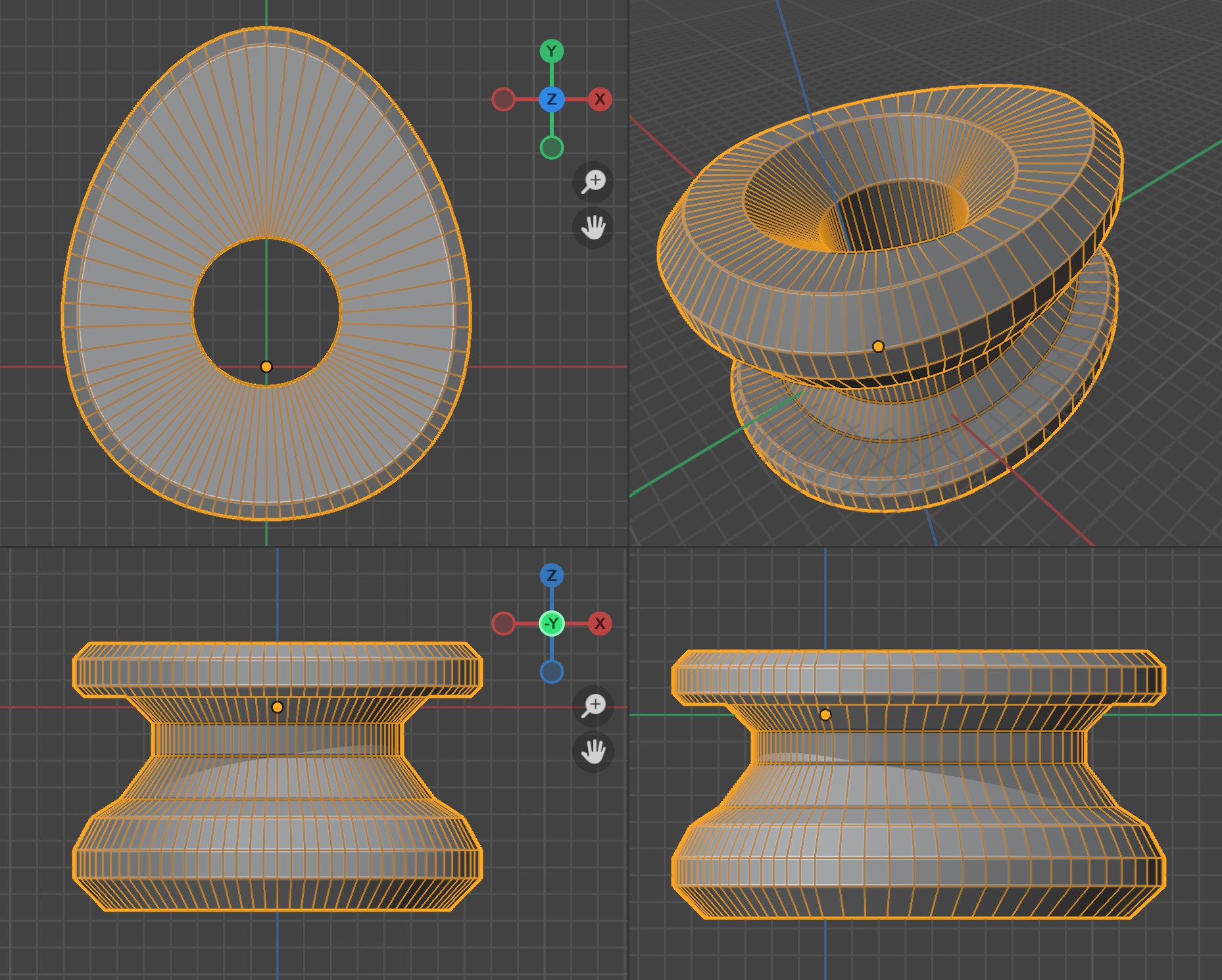
The hook is oval. With two hooks, as in my case, this lets you compensate for one or two millimetres of height difference: simply turn one of them by 180 degrees. That only works if it doesn’t sit too tightly on the screw, though. So measuring carefully beforehand saves work.
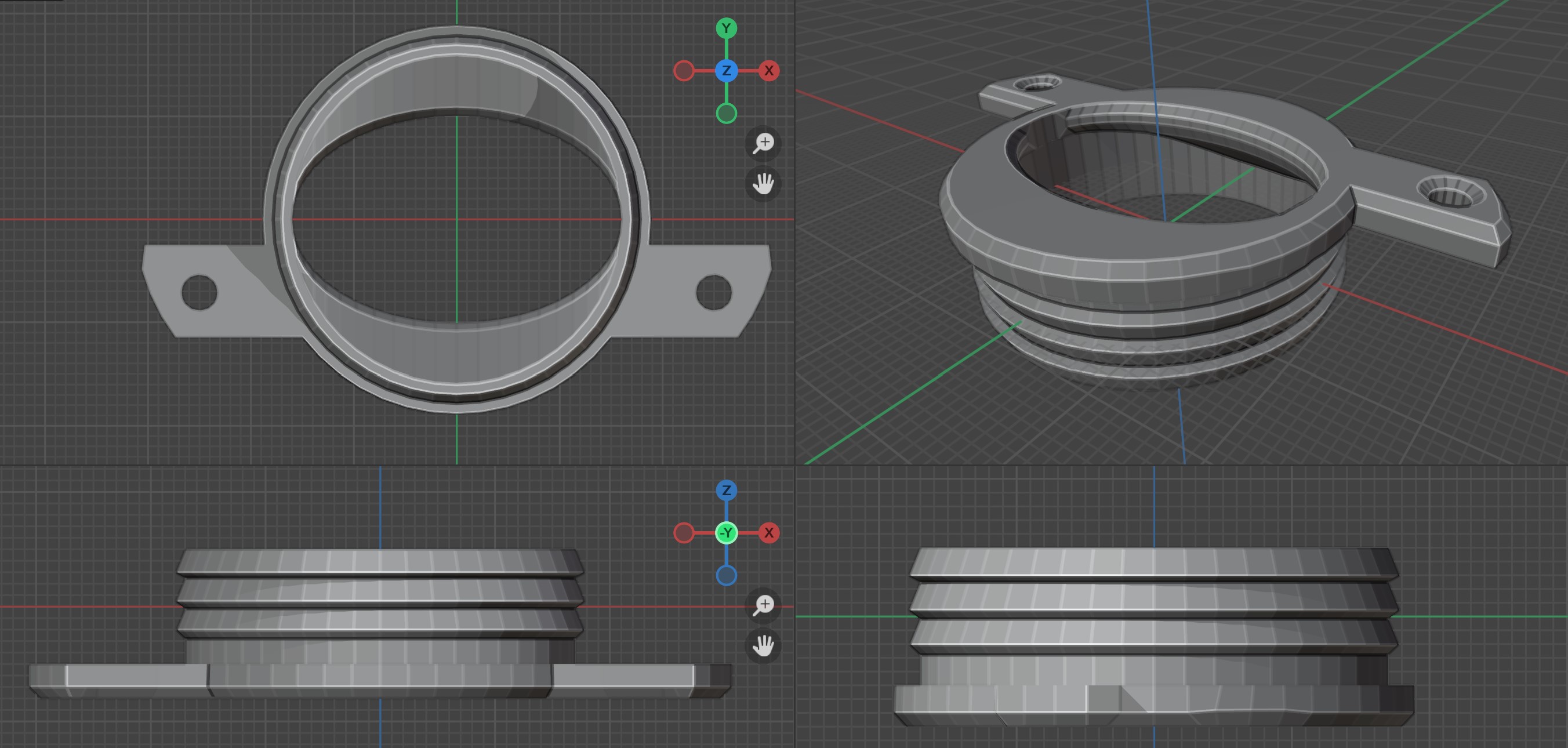
The inserts sit very firmly in the hole even without screws. If you want to be on the safe side, you can screw them in as well.
A hook for everything
A groove runs all the way around the hook. So it doesn’t just carry the mirror door, but anything hanging from a string, a small chain or picture wire, for example an IKEA picture frame.
Download: Hook and inlet on Printables
The drilling template
A day later I published a second model that also revolves around the 35 mm hole, this time in the other direction: a template for marking out the holes for a cup hinge.
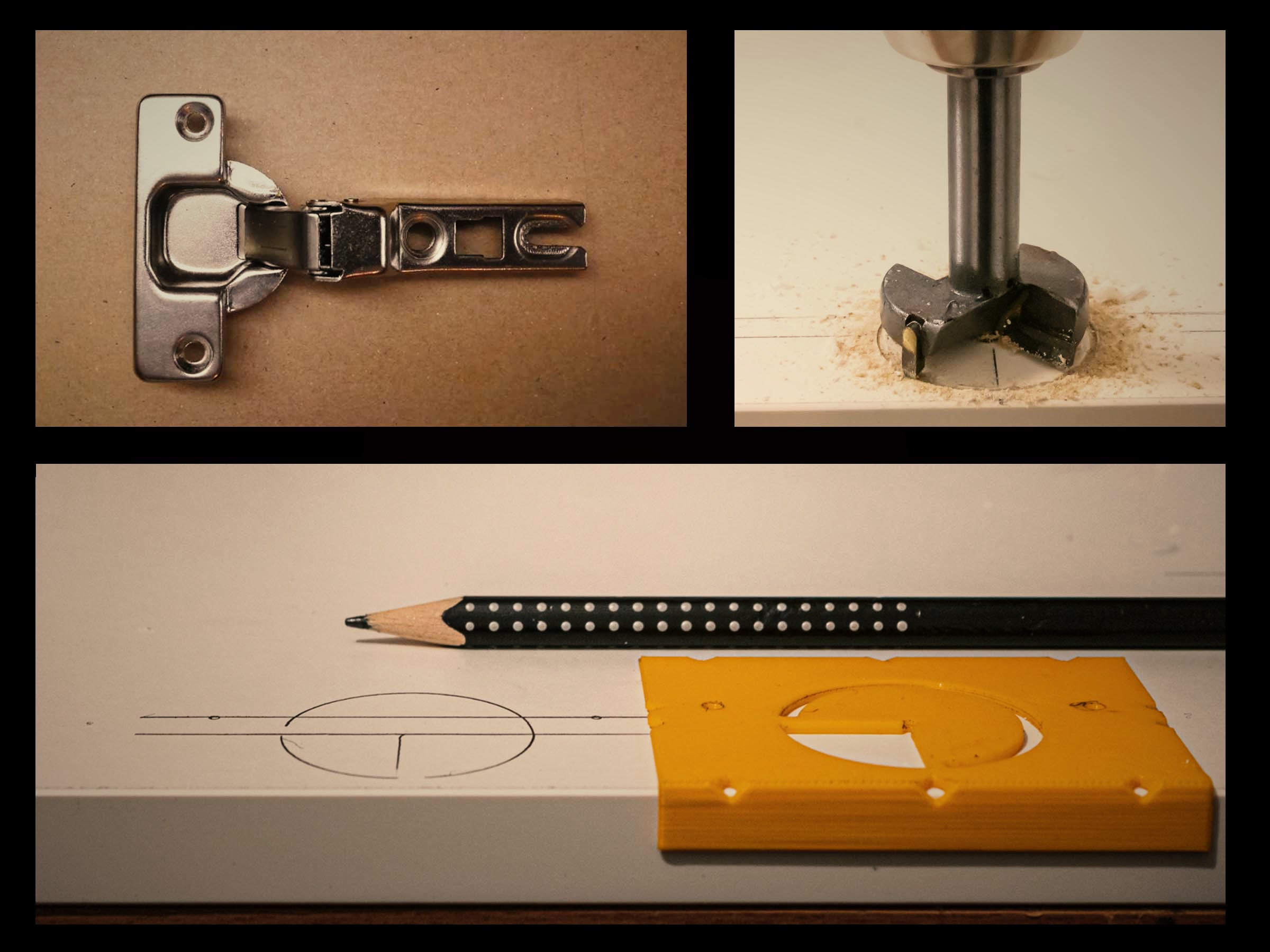
Small notches on the edge help you draw the centre line and the line for the screws. That way you can see where the hole will end up before you drill.
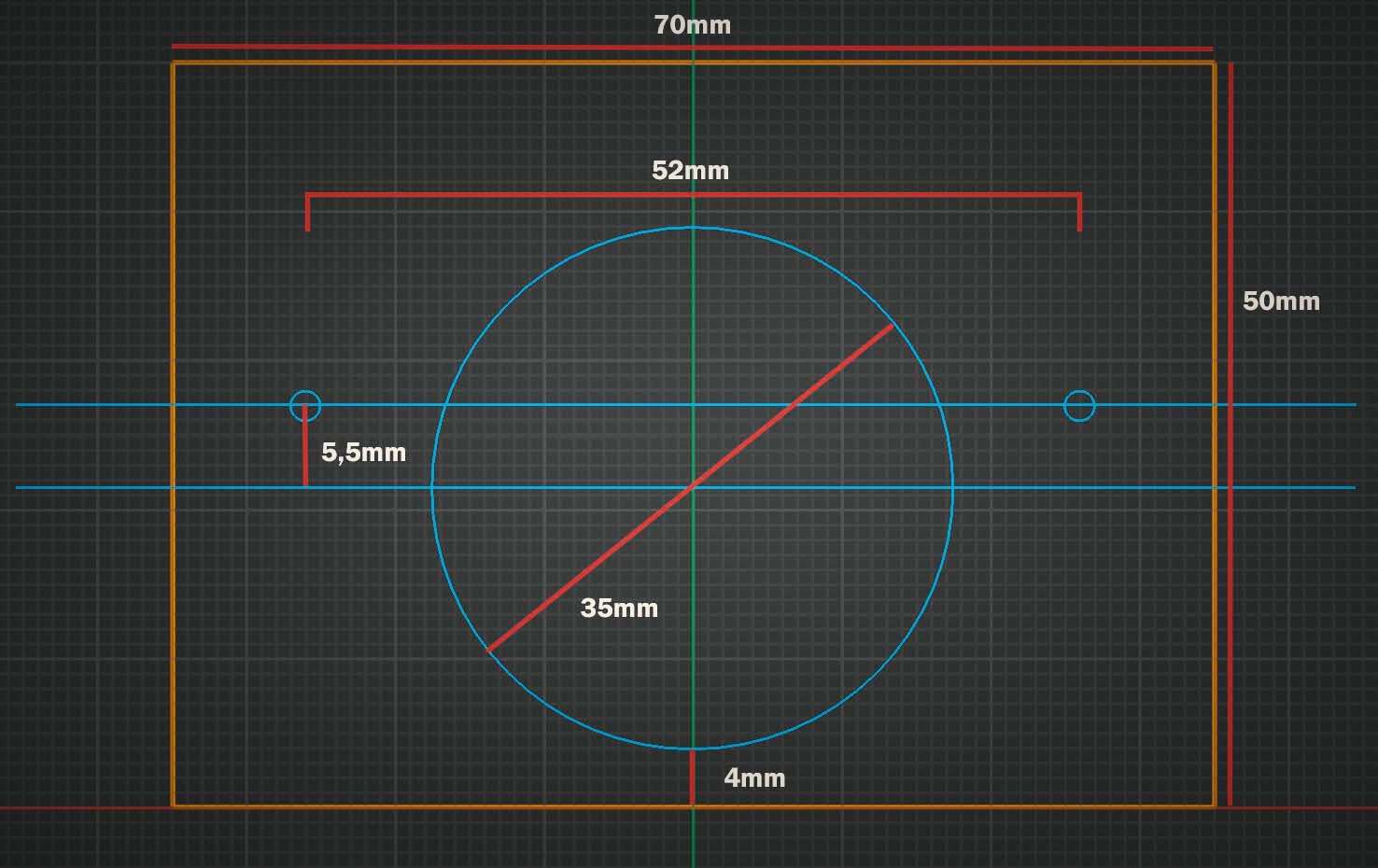
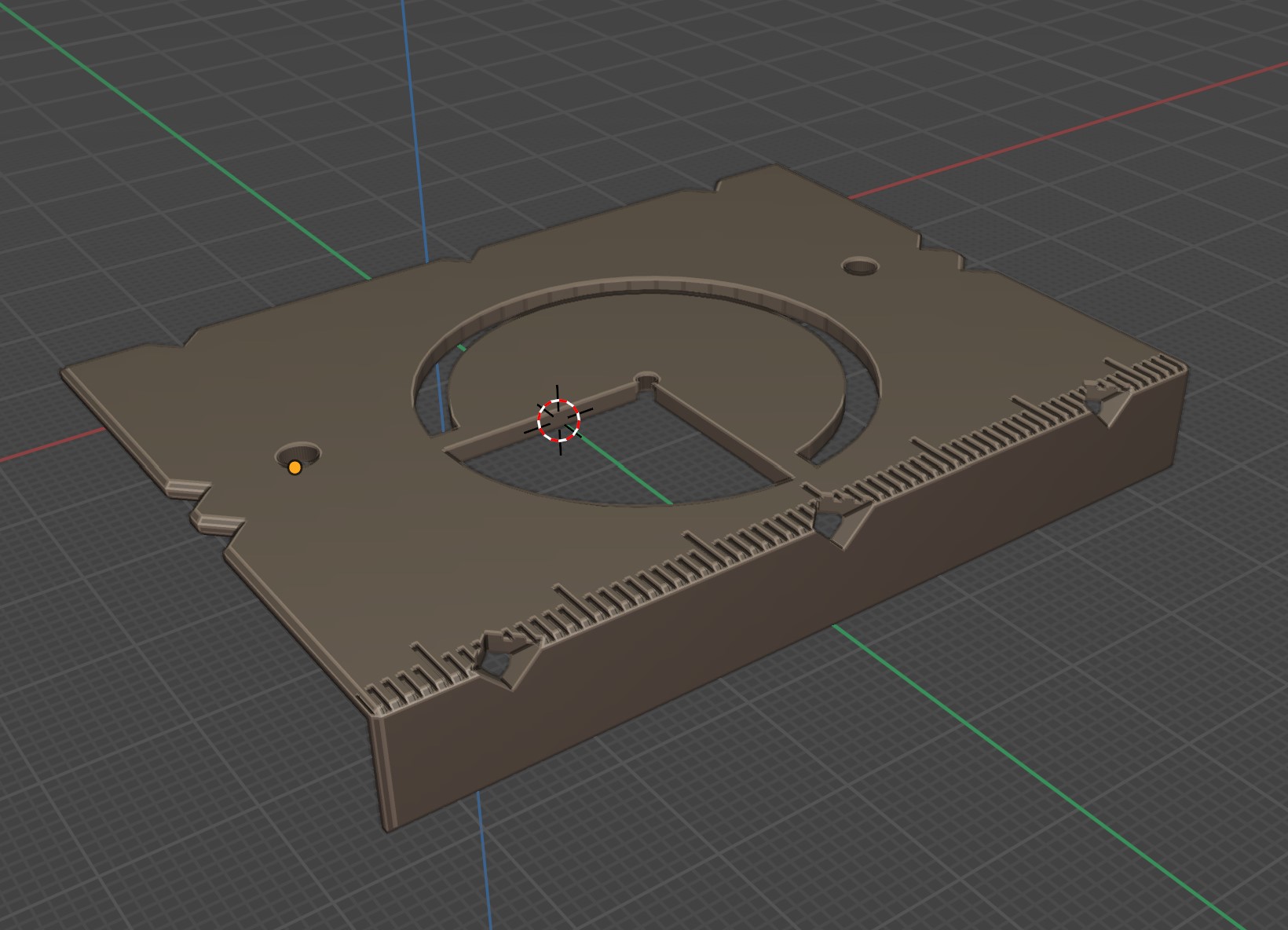
Printed in PLA with a 0.2 mm layer height (“Quality” profile in PrusaSlicer), no supports needed.
Download: Drill stencil for cabinet door hinges on Printables