When someone asks me what you actually need a 3D printer for, my answer these days is: Gridfinity. No other project has eaten up as many print hours, and with no other one do I see the benefit every single day.
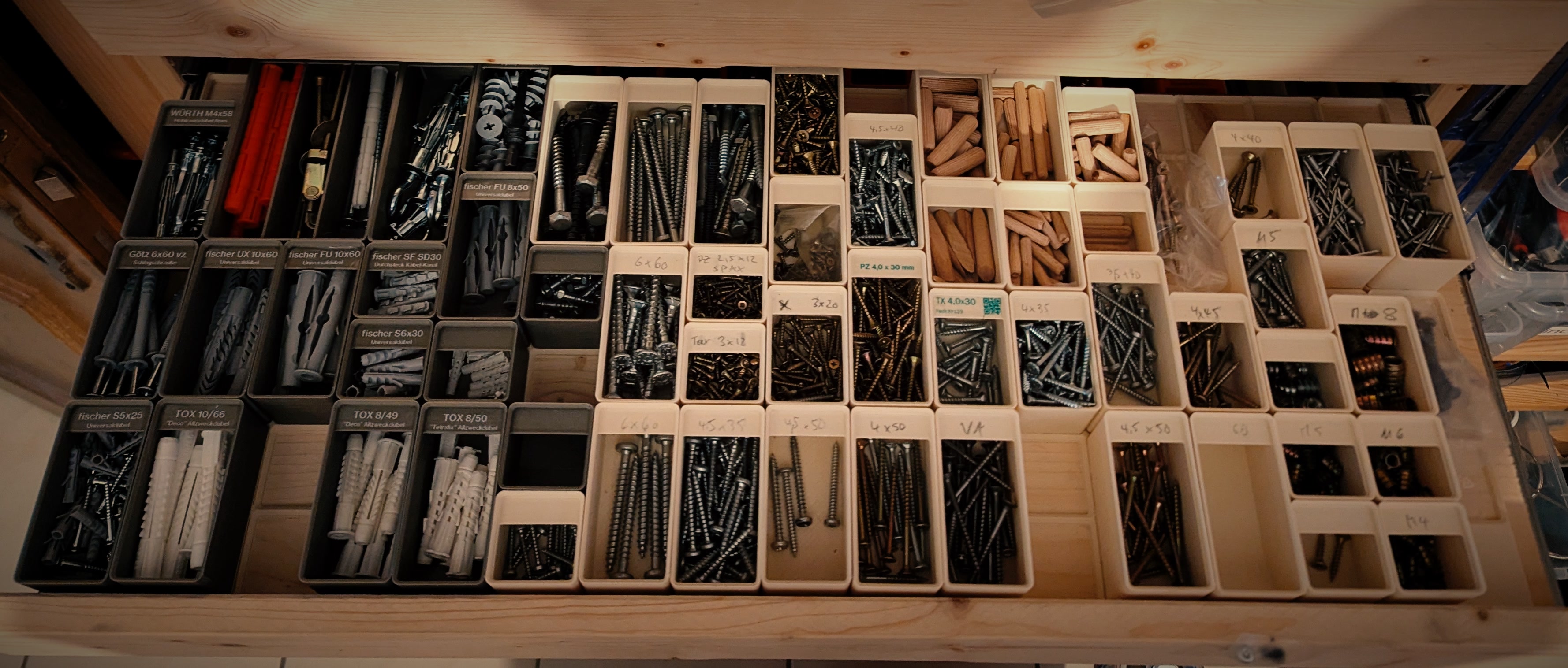
The drawers themselves belong to an IKEA Ivar shelf and are mounted in it with printed parts. A separate article on that is coming soon.
A half-cyborg reinvents the drawer
Gridfinity was invented by Zack Freedman, who builds electronics on YouTube under the name Voidstar Lab, preferably the kind you wear on your body. If you know his videos, you know him with data glasses and a home-built computer on his head, half man, half cyborg. In 2022 he presented a system in the video “Gridfinity: Your Ultimate Modular Workshop is FREE!” that has little to do with futuristic tech and still started a small revolution: little boxes for your drawers. Cool guy, by the way, he just talks a bit too fast.
The idea is simple. Everything is based on a grid of 42 × 42 mm, with heights in steps of 7 mm. A baseplate defines the grid, and the bins have matching feet on the bottom that lock into it. Because Freedman published the whole thing openly, the community extended it into thousands of variants in no time: bins in every size, holders for bits, pliers, batteries, pens. Everything fits with everything.
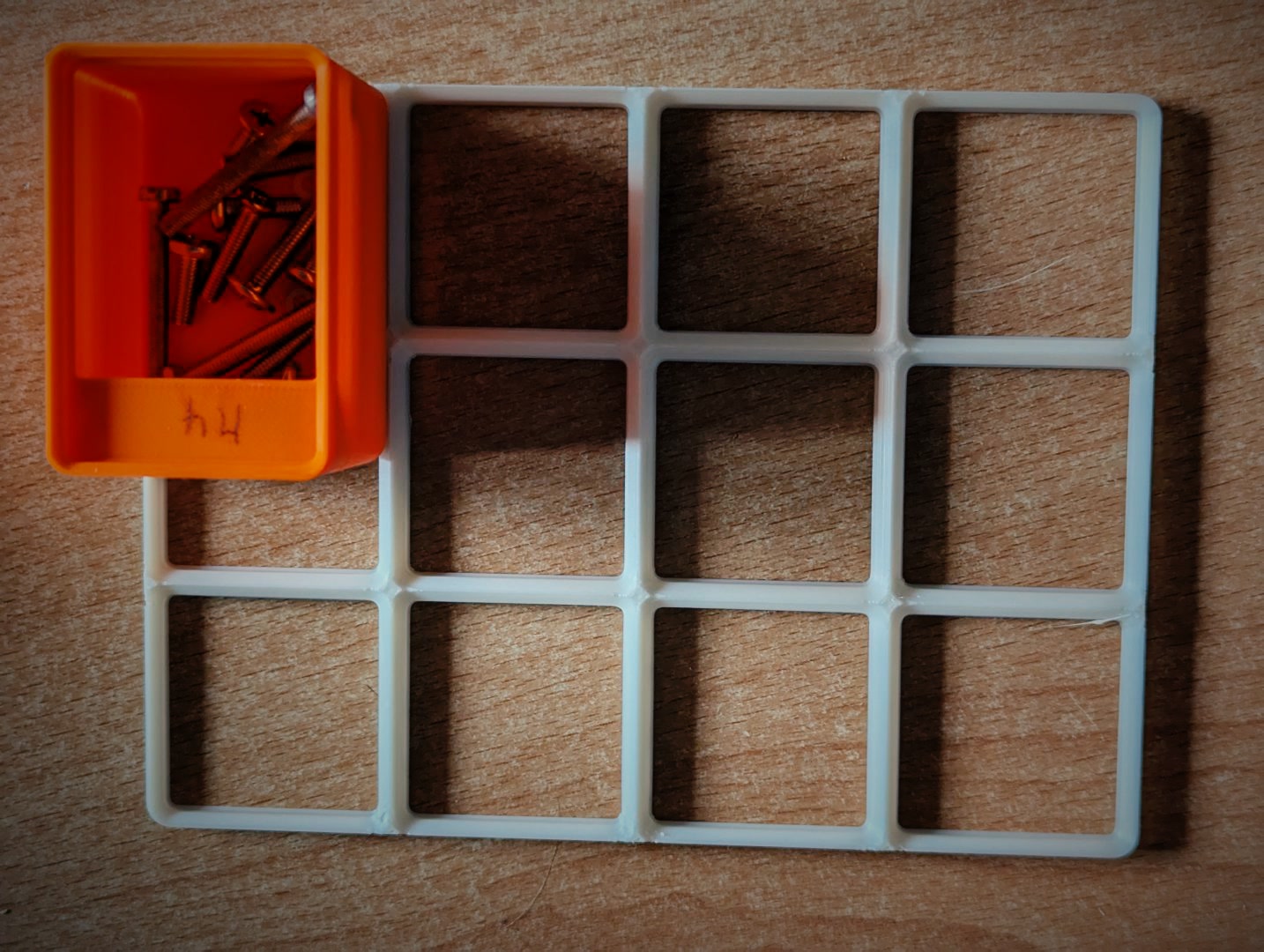
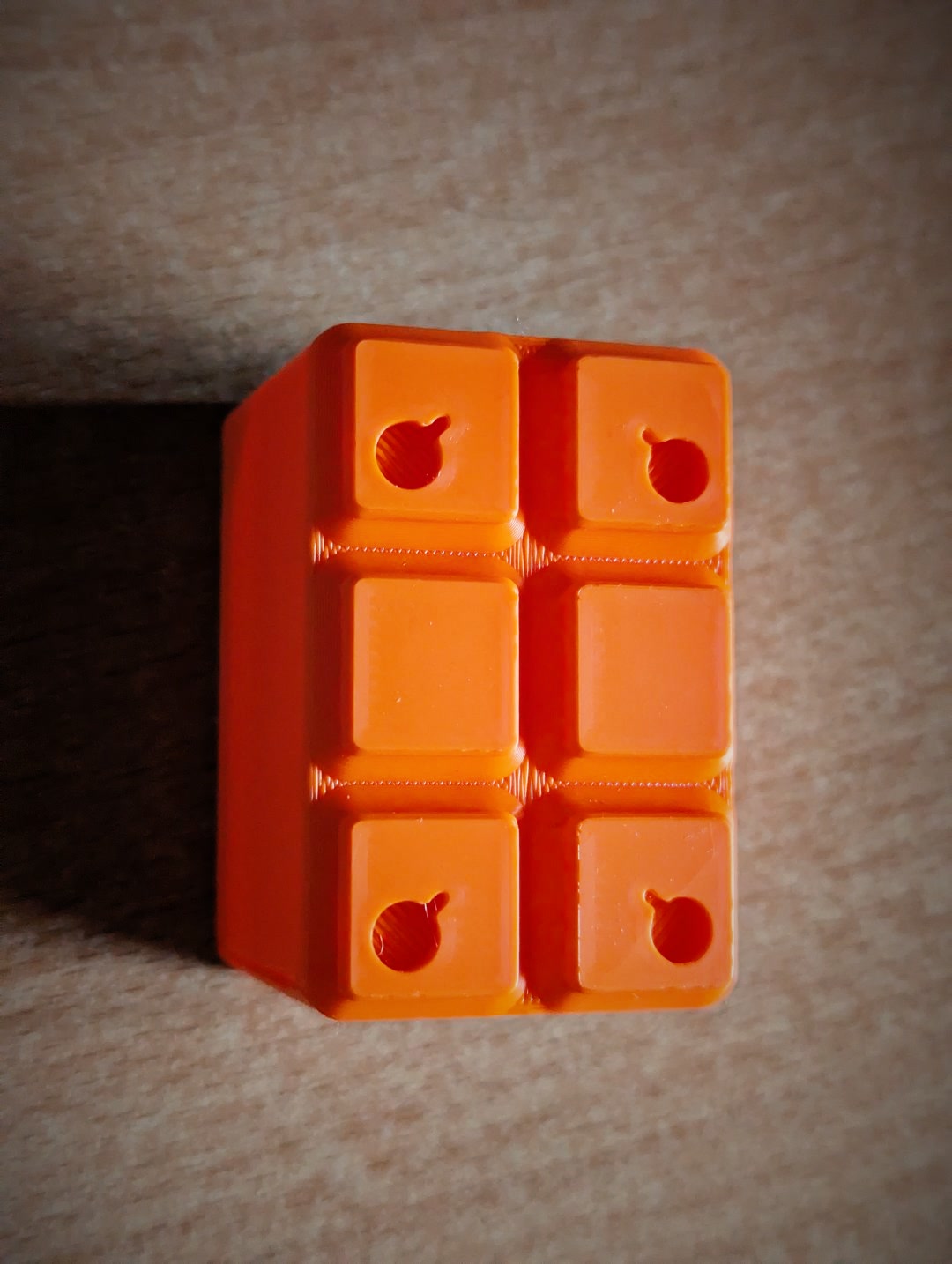
The holes in the corner feet are meant for magnets that hold the bin more firmly on the baseplate. I don’t use them.
Half pitch
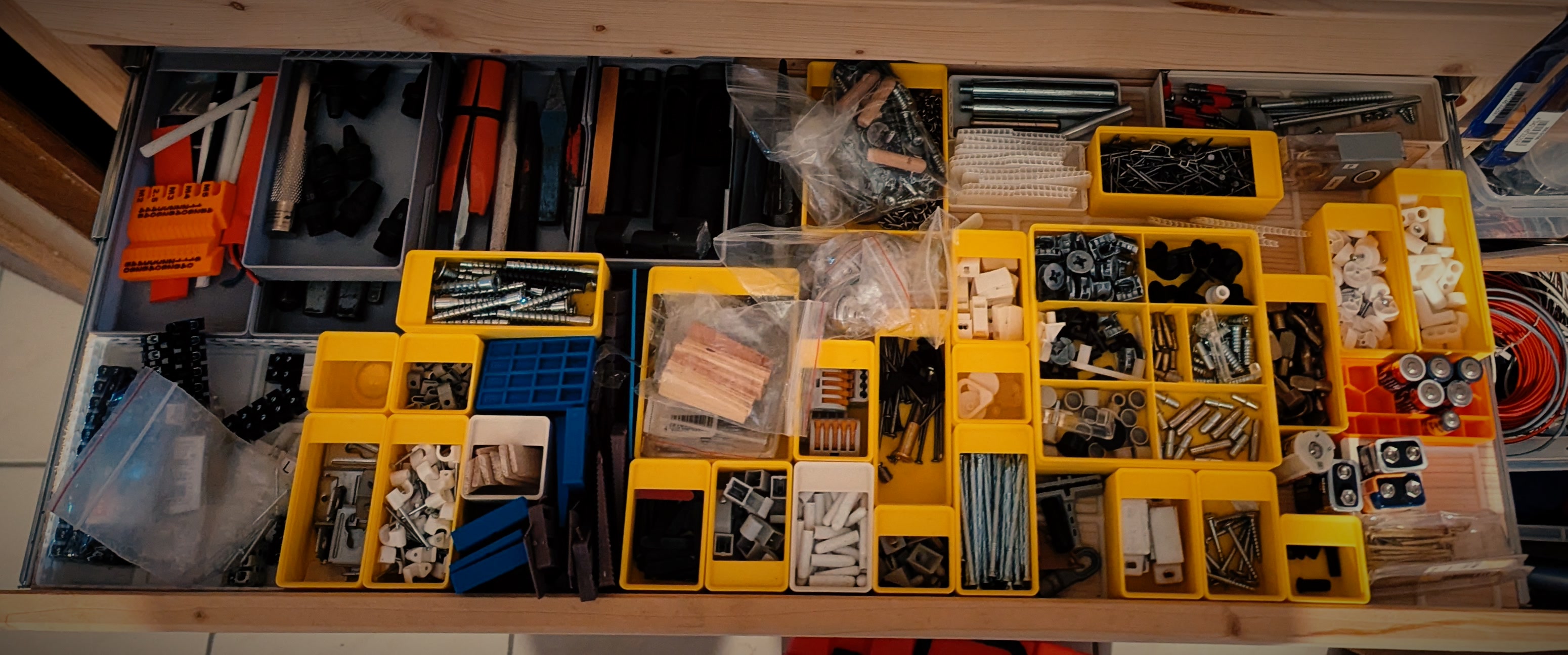
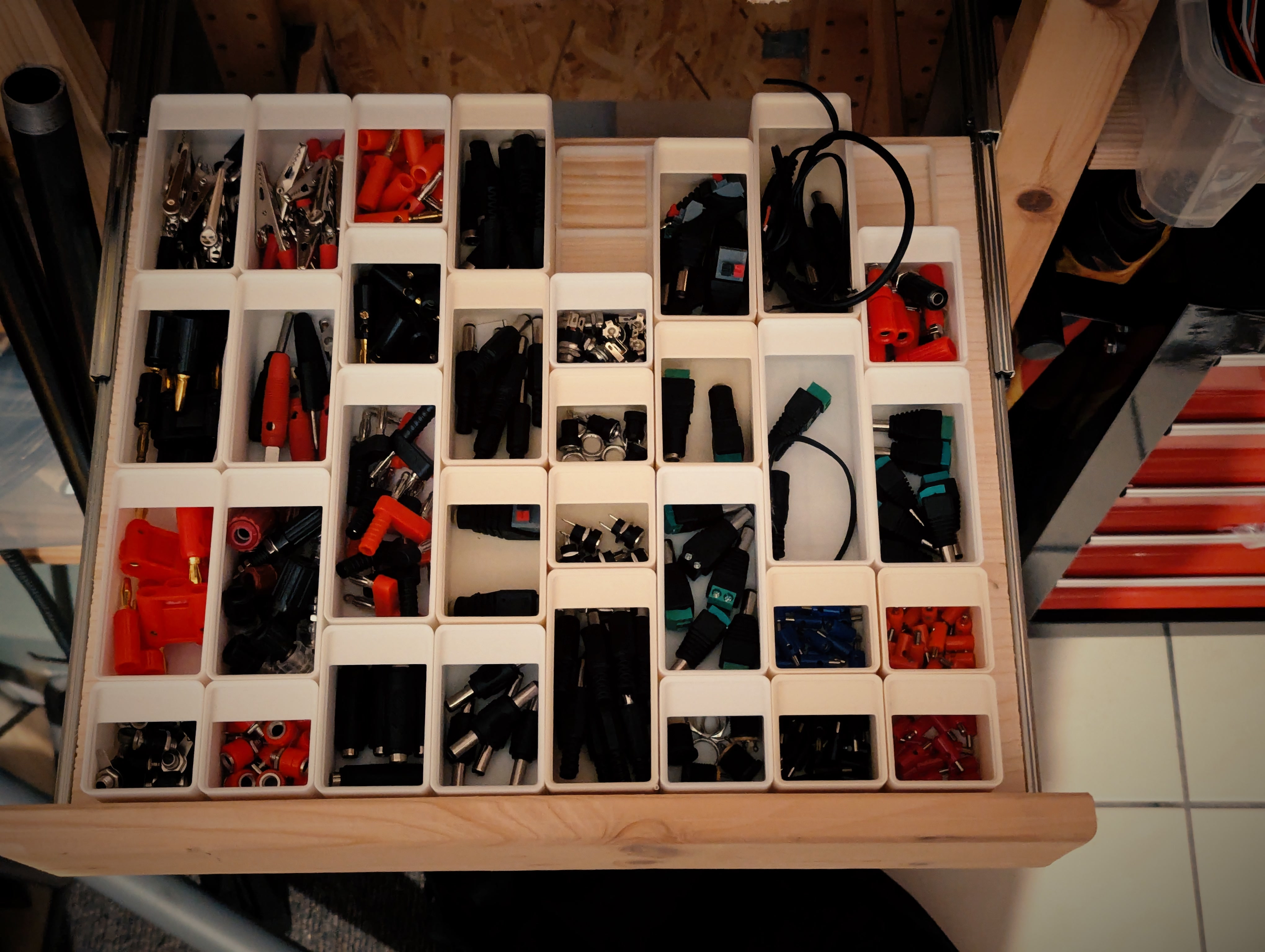
The baseplates in my drawers use the standard 42 mm grid. The bins, however, I print with feet on the half grid, i.e. 21 mm. The bin in the photos above is one of these: six small feet, one unit wide and one and a half deep.
That makes half sizes possible, and two bins of one and a half units fit one behind the other on three cells of the baseplate. It’s purely about saving space: the drawer gets used down to the last centimetre.
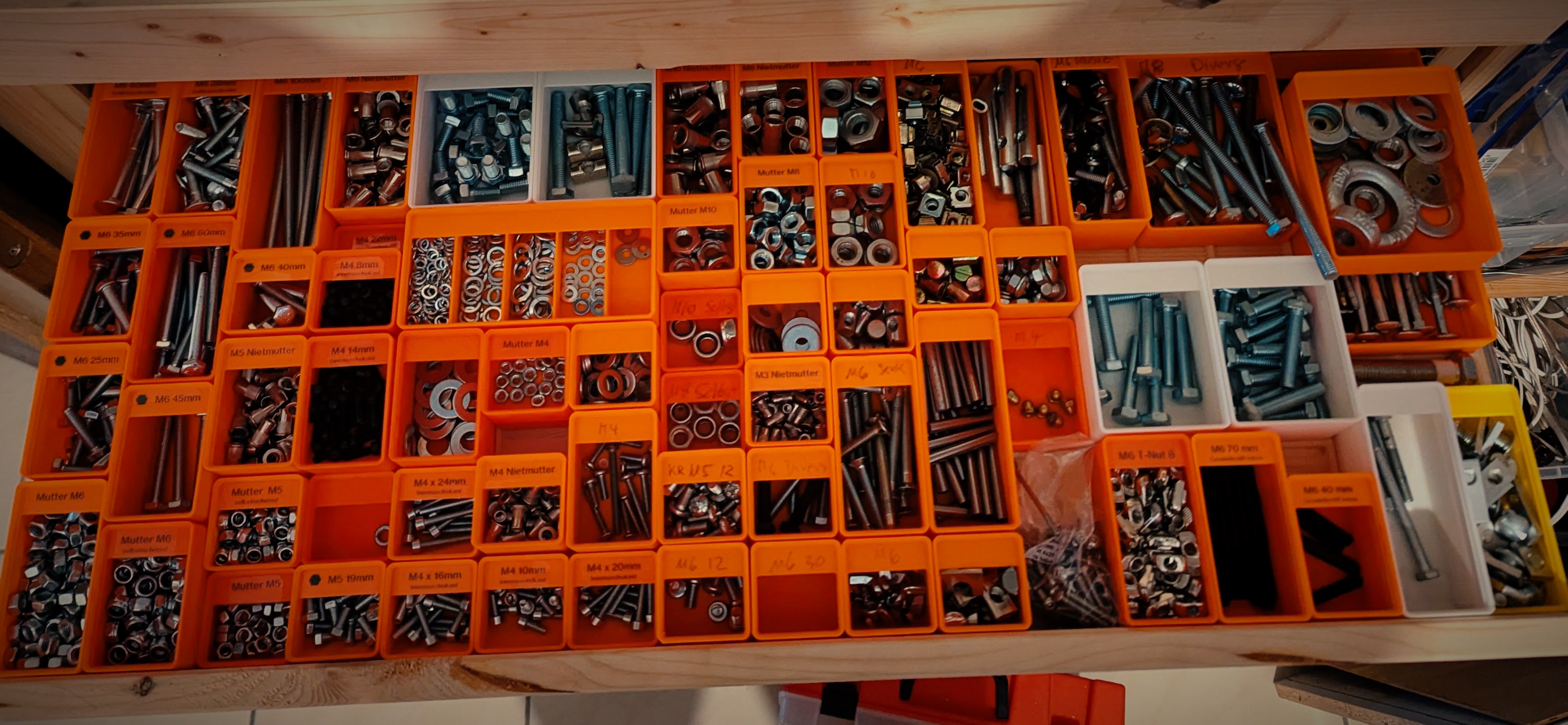
I glued the baseplates into the drawers with superglue. The bins themselves can still be taken out and rearranged at any time.
Flat trays stack very well, by the way. The feet of the upper bin engage with the rim of the lower one, so a drawer quickly becomes a two-storey one.
The models
Most of it I generated with OpenSCAD. The advantage over ready-made STL files: you set width, depth, height and dividers as parameters and get exactly the bin that the gap in the drawer needs right now.
If I remember correctly, it was the Gridfinity Extended library by ostat. It extends an older Gridfinity library for OpenSCAD with dividers, finger scoops, patterned walls and more. There’s an online customizer on MakerWorld for anyone who doesn’t want to install OpenSCAD.
For tools that need a shape of their own, I fell back on ready-made models from Printables.
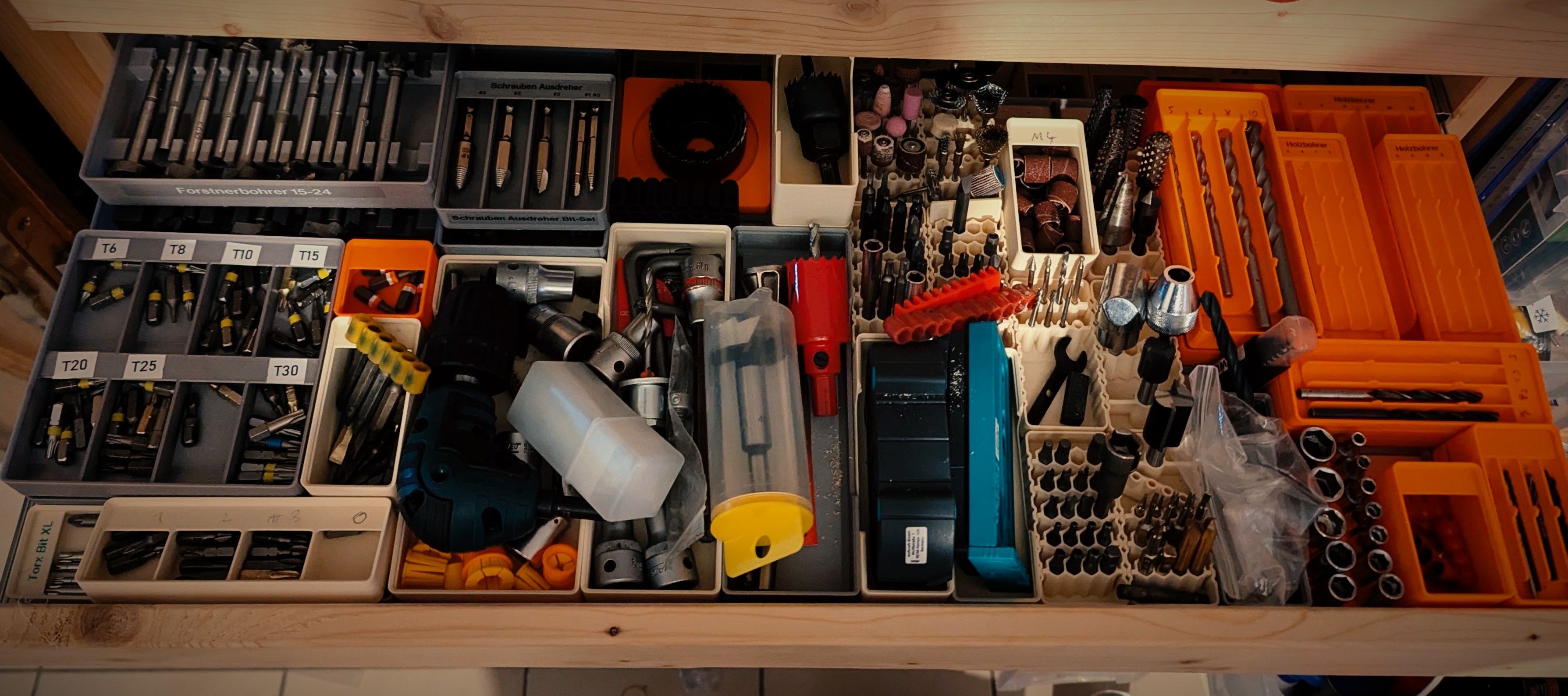
Forstner bits
The Gridfinity Bins for Forstner Drill Bits by Pablo Fernandez hold 19 Forstner bits, split across two bins of different heights. They’re designed to take up as little space as possible, are stackable and also have feet on the half grid.
Drill bits
From the same author come the Stackable versatile gridfinity bins for drill bits. They come in several heights and lengths, so you only print what matches your own set of drill bits; most of them hold four. There’s a recess in the bottom: press a drill bit down at the back and it tilts up at the front so you can grab it. These bins are stackable too and use the half grid.
Bits
The Modular Gridfinity storage for hex bits by Martin_au separates the bin from its contents: a bin takes removable holders for bits of various sizes, or dividers for small parts. The bin stays, only the inserts get swapped, which saves filament.
Batteries
The Battery Holder with optional Gridfinity base by Dead.Pixel keeps AA and AAA batteries together in one holder and needs only a little material. It’s available with and without a Gridfinity base.
Conclusion
Gridfinity is addictive. As soon as the first drawer is done, you’re already eyeing the next one.